|
|
On our journey in life, the most profound thing that we can offer others--partners, children, parents, friends, co-workers, bosses, neighbors--is our own healing and growth towards being a more loving person.
|

|
|
|
|
On our journey in life, the most profound thing that we can offer others--partners, children, parents, friends, co-workers, bosses, neighbors--is our own healing and growth towards being a more loving person.
|
|
|
|
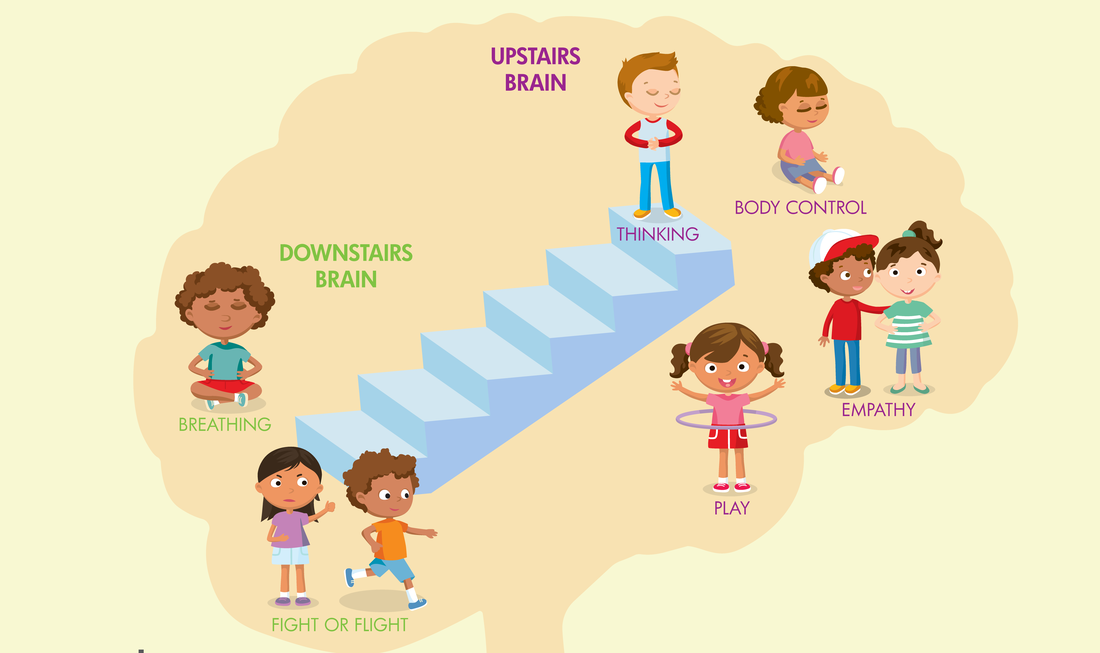
Imagine that your brain is a two-story house with an upstairs and downstairs brain. The downstairs brain is considered the more primitive part as it is responsible for basic functions like breathing and blinking your eyes, for reactions and impulses (including fight, flight, or freeze) and strong emotions such as anger or fear.
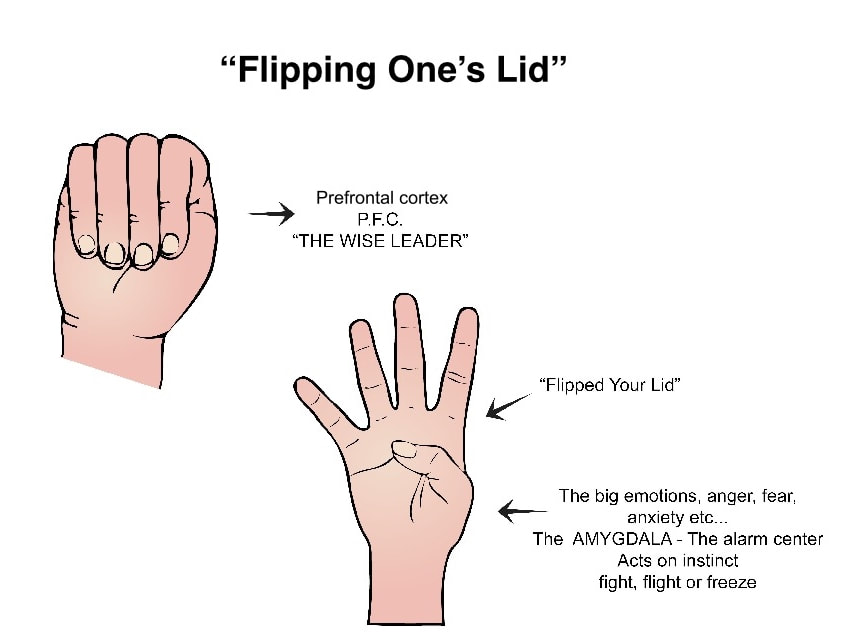
The upstairs brain is more evolved and gives us a greater perspective on life. The upstairs brain, which includes the cerebral cortex and the prefrontal cortex, is our thinking brain. It is where we use our imagination, make plans and good decisions, have self-understanding, develop empathy and morality and gain control over our emotions and our body. And it is constantly learning and developing. Dr. Daniel Siegel, a clinical professor of psychiatry at the UCLA School of Medicine and author of several books, has spent years studying and researching how our brain works. He says that when a child's upstairs brain is functioning properly, they can regulate their emotions, consider the consequence of choices and how others feel as well as thinking before acting. Our brains work best when the upstairs brain and downstairs brain work together and are integrated. Our goal as a parent is to help build and reinforce the stairway that connects the two brains. This takes time, practice, and support. We now know that most people's brains are fully developed until the age of twenty-five. This explains a lot about! Young children, teenagers and even young adults make poor decisions because their upstairs brain is still developing. In addition, the downstairs brain--the amygdala--is always scanning the environment for safety. The amygdala's job is to quickly process and express emotions, especially anger and fear. Teaching our children and youth about how the two parts of the brain work together can help them understand what is happening with them and their emotions. Dr. Siegel has developed something he calls the Hand Model of the Brain. In this YouTube video, he demonstrates how the thumb folded in is the downstairs brain--the amygdala. And when the four fingers are folded over the thumb, the upstairs brain is integrating both parts. But when the downstairs brain reacts, the child is Flipping Their Lid. Learning to recognize when they are starting to get upset can allow the child to move away from a stressful situation, take a break, do some breathing, or go somewhere quick. https://www.youtube.com/watch?v=gm9CIJ74Oxw A great book to help kids understand how to be handling their emotions is, Some Days I Flip My Lid--Learning to be a Calm, Cool Kid. https://www.amazon.com/Some-Days-Flip-My-Lid/dp/1683732510 All this brain knowledge is good for us adults as well. Comments are closed.
|
Categories
All
Archives
August 2026
|